
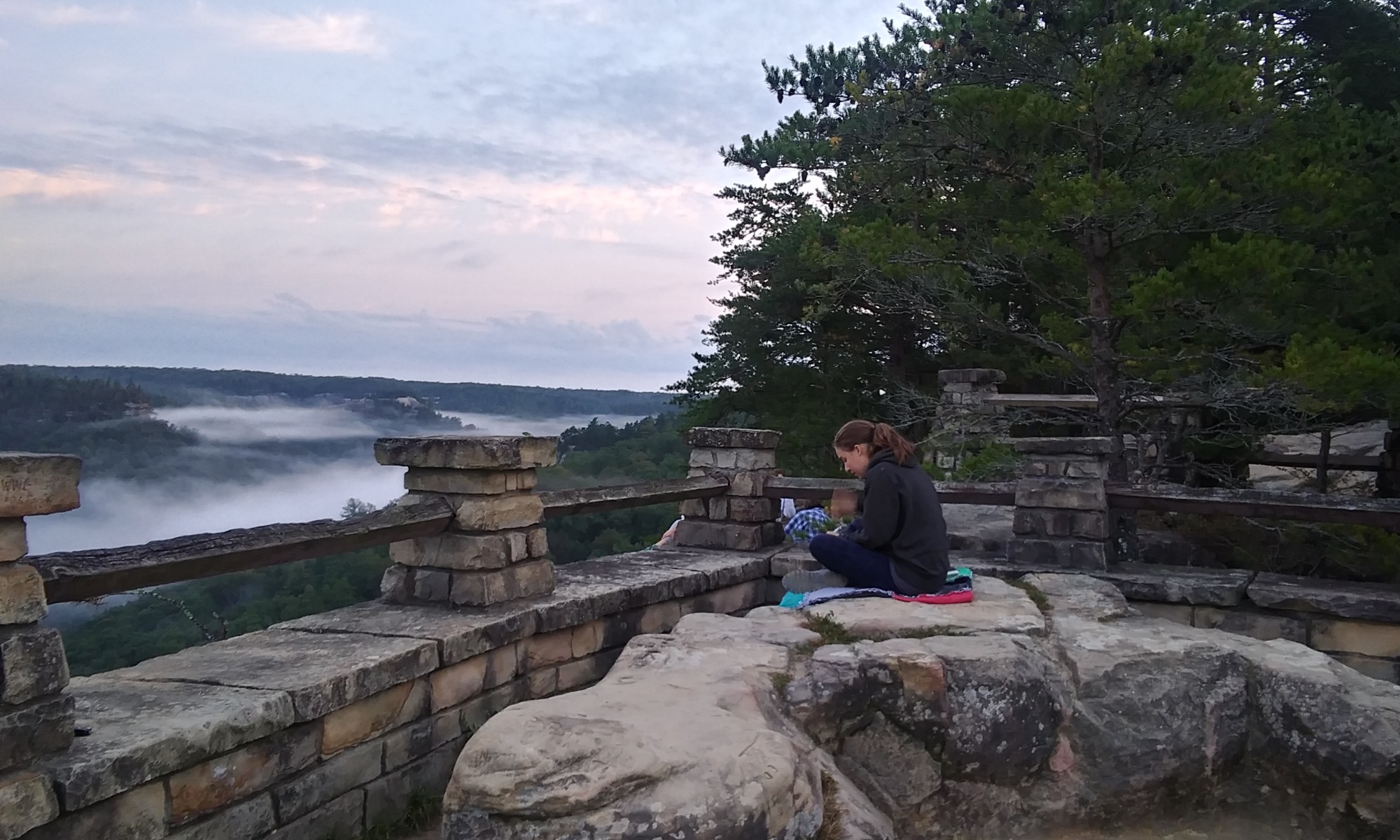
This was a writing assignment for a college class but I loved writing it so much that I wanted to share it with you all! Enjoy a little bit of a more serious paper (an eight page long essay) that I think is important to discuss.
“The serious person becomes handicapped, he creates barriers. He cannot dance, he cannot sing, he cannot celebrate. The very dimension of celebration disappears from his life. He becomes desert-like.” ~ Rajneesh (azquotes.com)
My life can be summarized in one story. When I was no more than four years old, I decided that I was too old to be sucking on my thumb. I asked my mom for socks to put on my hands and disciplined myself into breaking that habit. I have been, am currently, and always will be someone who is extremely self-disciplined and takes life very seriously. Some phrases to describe me are being intense, always serious, occasionally critical, often quiet, and sometimes amusing. Since I am so serious, it is not an enormous leap to say that I have always considered my educational journey serious as well.
From kindergarten to the end of second grade, I was in the public-school system. All of the work seemed to be too simple and I was always placed in the advanced classes and was grades ahead in my reading comprehension. If I had been able to continue at that rate, I would have been able to skip a grade. I could already write cursive, received awards, and was attending classes with the older kids. To say that I was proud was an understatement, but there was a certain point in my second-grade year, that everything seemed to go wrong in with my public-school experience. It eventually kept imploding until my mother had to pull both me and my sister out to be homeschooled. Even though I was proud of my accomplishments, I was not heartbroken that I had to leave.
Homeschooling was a fascinating and sometimes painful adventure. Our first year was dedicating to understanding what we needed to accomplish to make our schooling successful. It was a hefty transition and the curriculum that we tried did not bring about any form of success for our family. It was a strain on everyone in the family, and thankfully we were advised to research a program called Classical Conversations. This program is described clearest as a private school group meeting once a week that reflects on your work from the past week and assigns work for the next week built upon a liberal arts foundation. I was in this program from fourth grade until my junior year of high school. Throughout this time, the majority of my education was on the core subjects like english and writing, math, science, history, and social sciences. But since the program was so heavily based on a classical liberal arts education, we had several other subjects scattered throughout like latin, classic and mathematical logic, global geography, and music theory. Through this program, I received a very well-rounded education that opened many different neural pathways that have given me a love for both the creative and intellectual. From middle school on, I was mostly in control of my education and have learned self and time management. Before my senior year began, my parents and I made the decision that I would take all dual credit classes so that I could get several of my core classes out of the way so that it would take less time for me to begin the classes within my major. The transition into college classrooms was different but overall a lot easier than I originally thought. I was accustomed to the discussion-based classroom but it took some adjusting spending four days out of my week in a classroom and working with a class of over 20 students. But when I eventually adjusted to it, I have been loving my time in traditional college classrooms.
Throughout my educational journey, I have had several recurring themes that have appeared. Being labeled as a homeschooler has accompanied with many social challenges. Common phrases heard are: “do you even do anything?”, “do you have any friends?”, and “you must stay in your pajamas all day.” All of those are the total opposite of what a productive homeschool experience is. We had many friends through our enrolled homeschool curriculum and groups, 4-H groups, church, the library, and many other places where human interaction was necessary. We completed our school work every day on a set schedule throughout the day and went on many enjoyable adventures throughout the week. When we woke up for the day, we changed into fresh clothes and approached the day like we would normally approach school. When you work hard for your grades and work hard to maintain relationships outside of your house, it can become discouraging to never receive the recognition that you truly deserve because there are unfortunately homeschoolers that do not care about their education. Overcoming stereotypes has been effective on my mental health and really causes you to wonder whether you should put in the extra work because no one thinks that you are accomplishing anything already. But a wise teacher once told me in an ethics class that “integrity is doing what is right even when no one is watching.” Completing all of the tasks that was put before me was what gave me the self-motivation that has carried me through college classes so far.
Another recurring object has been that I have always been popular with my teachers. They were the people in my life that were teaching me how to delve deeper into the worlds and subjects that I so thoroughly enjoyed. They seemed to be the only people that took the education as seriously as I did. The other kids my age seemed to not have the same level of maturity that I had in my own mind and I latched onto the maturity of my teachers. A study published through the National Home Education Research Institute explored the relationship between homeschool students transitioning to more of a public-school setting. While this article was not completely relatable to all of my experiences, the study delved a little bit into this common theme within homeschoolers by saying that “The maturity level of students became an issue for many of the informants. As they tried to become part of the school culture, the immature level of some of the public-school students made it difficult for these home-schooled students to relate to their new peers and developing friendships. As one student stated “I didn’t find a lot of common interests… I was embarrassed for some of the students, you know, the way they acted and thought… often I found myself relating more to my teachers than my peers.” (Romanowski www.nheri.org )
I could not seem to fit in public school classes, homeschool classrooms, or even in church youth groups. Because of that, I always found my solace in the books that I have read. My favorite books have always been books that take me far away from my current situation, whether that is the depths of outer space or alternate versions of our world. The main characters are always at the perfect age and are finding their maturity through learning from their mistakes and are always finding themselves in situations that make them find out more about themselves. I would always imagine that I was the main character and be out on great adventures instead of being friends with the people that were around me. In middle school and part of high school, I had a really hard time being social and talking to the kids in my grades. I really poured myself in my studies and books. Because of that, I was able to successfully memorize all of the major bodily systems and organs as well as the entire map of the world which I could draw from memory. I completely immersed myself into the classic logic styles and memorized every table that was placed into the textbook. There was a certain time that I would make truth tree graphs in church instead of paying attention because it was more relevant to me than the pastor. But as I have grown up, I have had to learn how to communicate more with the people around me instead of learning to communicate with the letters and numbers on the page.
Learning how to be more in touch with the people around me was hard. There is no other word that could be used to describe it. It was hard. I had to learn how to connect on an emotional level instead of learning through a book. Ironically, I was always coincidently put into leadership positions in this time in my life. I was the leader of the debate team, leader on the research paper, elected onto the leadership team of our youth group, and a horse lesson teacher from our barn. I learned a new set of skills, and it took me about three years to be as comfortable talking to a stranger on the phone as talking to one of my closest friends.
Throughout my leadership growth, my educational focus shifted from purely academic learning to also learning a set of skills or trade. This is a natural mindset shift as we transition from adolescence into adulthood but this was such a drastic shift for me that it really made me evaluate my values and goals for the future. As a result, I delved into a journey of self-discovery and understanding. The way that I was able to come to a place of complete self-understanding and positivity through the enneagram test. Miles Matise published an article in the Journal of Professional Counseling detailing the basics of the enneagram. “The enneagram [is] a tool for self-discovery […]. The instrument help[s] … gain insight into the behavioral characteristics of clients, their emotional tendencies, and attitudinal patterns that have inhibited their developmental growth toward a more fulfilling life. The enneagram can be embraced by all genders, different ethnicities, and people with various religious backgrounds without threat to their fundamental beliefs or dogma.” (Matise Page 42) The enneagram type ones are “persons with the perfectionist-style (point one) desire to be right and good. They want to make the world a better place. Their core fear is being bad or morally unsound. They believe that they are good if they do what is right. The trance of perfectionist-style client is fixating on inadequacies in themselves, others, and the world around them. They are perfectionistic, critical and often obsessive about order and control.” (Matise Page 42) Through this test, I understood that I never connected with kids my age because from a young age I had a very high standard for myself and the people around me. “These people [type ones] have high standards, and anger.” (Matise Page 42) I was finally able to understand why I acted as I did and that I was not the only one in the entire world that cared about the rules that were in place. I had to make some hard decisions and have some hard conversations. I had to distance myself from some of my friends because I realized that I was acting like them because I wanted to fit in and not because it was who I truly was. I took the time to learn about myself and eventually learned to be comfortable with my own company for those months of self-reflection. I also realized that I had developed a negative view of school work because I was feeling emotionally drained every time that I went to class for the week. Because of my self-realignment, I developed a love of more academic learning again.
In conclusion, my educational journey as been always varied and never easy. When I take a walk down memory lane, “I see the ups and downs. I see the mistakes I’ve made. I see a funny person. I see a serious person. I see a diamond. I see the good times. I see the bad times. And I see knowledge of self. I know who I am.” ~ Tracy Morgan (azquotes.com) My education has helped me learn who I am, and who I want to be throughout the next era of my education. One thing that was always a thought in the back of my mind was the feeling that my education keeps stretching out before me like a person staring at the brink of an immense desert. All I could think about when I was in elementary school was getting to middle school, and when I was in middle school, all I could think about was getting to high school. Now that I am standing on the brink of college, I feel like I have been learning for an eternity. But I have come to the realization that I will never stop learning in my life. After I graduate college, I will have to learn how to do the job that I am accepted to. I will have to continue learning about technology and trends to keep in touch with the culture around me. I will have to learn about my careers improvements and discoveries to make sure that I am still a credible person to come to for advice and to pay for my knowledge. This realization has helped me have a more positive outlook on the rest of my life and that what I have learned is only a foundation of what I will learn throughout my whole life. My educational journey has led me from being the girl with her nose always in a book to someone eagerly waiting to see what I am able to learn next.
Works Cited
Matise, Miles. “The Enneagram: An Innovative Approach.” Journal of Professional Counseling: Practice, Theory, and Research, vol. 35, no. 1, 2007, pp. 38–58., http://iranenneagram.ir/wp-content/uploads/2017/06/iranenneagram.TCA-Journal.Spring-2007.pdf#page=45.
Romanowski, Michael H. “Home-Schooled Students’ Perceptions of the Transition to Public School: Struggles, Adjustments, and Issues.” National Home Education Research Institute, Ohio Northern University: Center for Teacher Education, 10 Jan. 2002, www.nheri.org/home-school-researcher-home-schooled-students-perceptions-of-the-transition-to-public-school-struggles-adjustments/.
“Z Quotes: Quotes for All Occasions.” Quotes About Seriousness, www.azquotes.com/.
 Comm Equestrian